
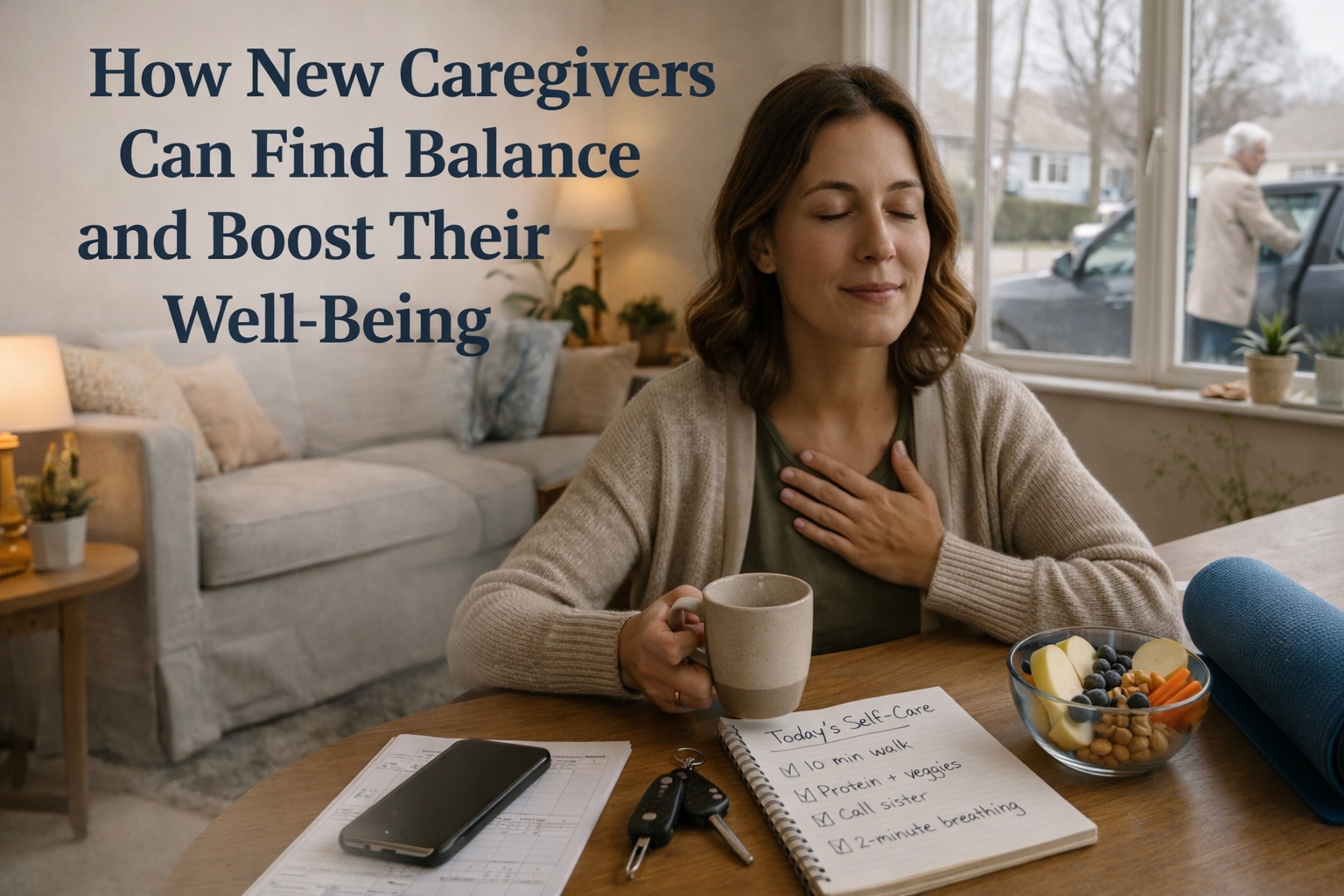
 How New Caregivers Can Find Balance and Boost Their Well-Being
For new caregivers supporting an older family member who still drives, family caregiving can quickly become a full-time mental load. Between appointments, medication side effects, winter driving worries, changing eyesight, and the pressure to follow legal and safety rules, caregiving challenges stack up fast, and caregiver stress can feel constant. When self-care gets pushed aside, patience shrinks, decisions get harder, and caregiver well-being starts to slip. Self-care importance isn’t a luxury in this role; it’s protection.
What Self-Care Really Means for Caregivers
Self-care is the basic upkeep that helps you stay steady enough to care for someone else. It includes sleep, movement, food, breaks, and emotional support, not spa days. When caregiving piles up, self-care protects your body, your mood, and your ability to bounce back.
It matters because caregiving can quietly wear you down, and the health of caregivers often suffers without attention. When you feel better, you communicate more calmly, notice safety changes faster, and make clearer calls about driving limits and backup transportation.
Think of self-care like keeping your phone charged before a long day of GPS directions. If you start at 10%, every detour feels like a crisis. With a fuller battery, even emotional stress becomes easier to manage.
That’s where a practical menu of daily self-care options can help.
Try 10 Self-Care Moves You Can Actually Fit In
Self-care isn’t another chore; it’s the small, repeatable habits that protect your energy, mood, and focus so you can keep showing up safely and steadily. Pick one or two ideas to start, then add more as they feel natural.
- Do a 10-minute “mobility snack” each day: Set a timer for 10 minutes and do gentle moves you can fit anywhere: 5 sit-to-stands from a sturdy chair, 10 wall push-ups, and a slow lap around the living room or driveway. This kind of caregiver exercise routine builds strength for real tasks like helping with transfers, carrying groceries, or steadying someone on steps. If you’re driving to appointments, add 30 seconds of calf raises at the car before you sit down.
- Pair appointments with a short, safe walk: When you arrive early for a medical visit or pharmacy stop, take a 5–8 minute walk in a well-lit area, then head in. It’s a simple way to boost circulation and stress relief without “finding workout time.” If your loved one is with you, walk together at their pace or do one loop while they rest comfortably.
- Build a “two-minute calm-down” for stress spikes: When you feel your shoulders rise or your patience thinning, pause and do slow breathing: inhale for 4, exhale for 6, repeated 5 times. Many caregivers also use breathing exercises to reduce mental overload in the moment, especially before a tricky conversation or a drive in heavy traffic.
- Use the “protein + color” plate shortcut: Healthy eating for caregivers works best when it’s automatic. Aim for a quick protein plus one colorful produce item each time you eat, Greek yogurt + berries, eggs + spinach, tuna + tomatoes, or rotisserie chicken + bagged salad. Keep backup options you can eat one-handed: nuts, cheese sticks, fruit, and pre-cut veggies.
- Create a hydration and medication “landing pad” by the keys: Put a small tray near where you keep car keys with a water bottle, your own meds/vitamins, and a simple snack. This reduces skipped meals and dehydration on long errand chains, which can worsen fatigue and concentration. It also helps you separate your needs from your loved one’s routine, an important part of real self-care.
- Schedule one support touchpoint per week: Text a friend, attend a caregiver group, or ask a sibling for a 15-minute check-in call, and put it on the calendar like any appointment. Research links perceived social support with lower caregiver burden, so “being connected” is more than a nice idea. Be specific when you reach out: “Can you sit with Mom Tuesday at 2 so I can take a walk?”
- Choose shared activities with seniors that don’t feel like therapy: Try a “low-stakes together” list: sorting photos, watering plants, folding towels while you chat, or listening to an audiobook on short drives. These activities support connection without requiring a lot of energy from either of you. If driving is becoming stressful for them, these shared moments can preserve independence and dignity without arguing about the keys.
- Start a new hobby that fits in the cracks of the day: Pick something you can do in 10–15 minutes: a puzzle book, simple stretching/yoga video, sketching, or learning a few phrases of a language. Keep the supplies visible so it’s easy to begin, and stop before you’re exhausted. A small hobby is a quick way to reclaim “you,” which supports emotional resilience.
These moves work best when they’re small, repeatable, and tied to moments you already have, before the car starts, while the kettle boils, or after the last appointment. If guilt, time pressure, or paperwork keeps tripping you up, a few simple fixes can remove those barriers and make these habits stick.
Caregiver Balance: Common Questions Answered
When time is tight, a few small adjustments can still protect your health.
Q: What are some easy self-care routines new caregivers can start to reduce stress?
A: Start with a 2-minute reset: slow your breathing, drop your shoulders, and unclench your jaw before you react. Treat self-care as anything we do deliberately, so even a short shower, fresh air on the porch, or a quick stretch counts. To reduce guilt, remind yourself that a calmer caregiver makes safer decisions.
Q: How can new caregivers maintain healthy eating and exercise habits despite a busy schedule?
A: Use “minimums” you can keep: a protein snack plus a fruit, and 8 to 10 minutes of movement most days. Keep a written list of three fast meals and stock the same staples weekly to cut decision fatigue. If finances are a stressor, know you are not alone because many caregivers reported financial strain, and simple, low-cost foods can still support energy.
Q: What are simple ways to stay socially connected while caregiving?
A: Make connection automatic: one scheduled call or text thread each week that you never have to “plan.” Ask for specific help, like a 20-minute check-in during a tough time of day. If leaving home is hard, try an online caregiver group or a neighbor chat at the mailbox.
Q: How can new caregivers find enjoyable activities to do with their senior loved ones that also support their well-being?
A: Choose low-pressure activities that reduce friction, like listening to music, sorting photos, or folding laundry together while talking. Add a short seated stretch or a gentle walk to make it mood-lifting for both of you. When driving is sensitive, plan activities that do not require a car to keep the day calmer.
Q: What mobility and safety solutions can help caregivers support older drivers dealing with vision decline or medication effects?
A: Start with a simple safety check: review medication timing and side effects with a pharmacist and avoid driving right after dose changes. Encourage vision exams, brighter night-driving alternatives, and routes that minimize left turns and high-speed merges. Keep a backup transportation plan ready, including key documents (insurance cards, medication lists, and appointment details) saved in an easy-to-share format using a secure PDF file converter, so you are not forced into risky trips.
Small steps add up, and you deserve support while you support someone else.
Caregiver Habits That Protect Energy and Safety
Try these repeatable routines to steady your week.
Habits work because they reduce decision fatigue and keep your body and mind supported even on hard days. For caregivers guiding older drivers, consistent routines also create calmer, safer choices around errands, appointments, and when not to drive.
Two-Minute Arrival Pause
- What it is: Sit down, exhale slowly, and name one priority before doing anything else.
- How often: Daily, after coming home or before caregiving tasks.
- Why it helps: You respond more thoughtfully, not reactively, when stress spikes.
Water-First Check
- What it is: Drink a full glass of water before coffee, calls, or driving.
- How often: Daily, each morning.
- Why it helps: Hydration supports energy and patience during long, demanding stretches.
Ten-Minute Mobility Loop
- What it is: Do easy walking or chair moves, focusing on hips, ankles, and posture.
- How often: 5 days per week.
- Why it helps: Gentle movement reduces stiffness and improves confidence during transfers and outings.
Weekly Health Admin Block
- What it is: Set a 15-minute timer to take one small step toward longer-term stability, review benefits, update a resume bullet, or research a flexible education path.
- How often:
- Why it helps: Making steady progress on your “next chapter” reduces the stuck feeling that fuels burnout and can ease financial/career stress in the background of caregiving.
One-Page Trip Plan
- What it is: Write preferred routes, backup rides, and emergency contacts on one page.
- How often: Weekly, then update after changes.
- Why it helps: Clear plans reduce rushed driving decisions and missed appointments.
Pick one habit to start, then tailor it to your family’s rhythms.
Sustaining Caregiving With Small Self-Care Choices That Last
Caring for an older driver can feel like carrying everyone’s safety and comfort on your shoulders, day after day. The steadier path is an ongoing self-care commitment built on simple, repeatable habits and a mindset of caregiver empowerment, protecting your energy so you can stay present. Over time, that self-care motivation supports long-term well-being and leads to more positive caregiving outcomes, including calmer decisions and fewer burnout spirals. Small habits done consistently protect the caregiver as much as the person receiving care. Choose one practice from today, hydration, a brief walk, or a few quiet breaths, and do it once, at the same time tomorrow. That consistency matters because it builds resilience and steadiness for the road ahead.
By Lydia Chan
Alzheimer’s Caregiver


 Older Drivers Forum