
Why Tyres Matter More Than You Might Think
For many older drivers, experience, patience and confidence are valuable assets on the road. However, as eyesight, reaction times and judgement of speed or distance can change over time, it becomes even more important to ensure that the vehicle itself is in the best possible condition to help compensate.
One of the most critical — and often overlooked — aspects of vehicle safety is tyres. Tyres are the only part of the vehicle that make contact with the road, and their condition has a direct impact on braking, steering and stability, particularly in wet conditions.
Research highlights just how important this is. At 70mph in wet weather, worn tyres have seven times more effect on stopping distance than drinking alcohol. In real terms, worn tyres can add 27 metres, approximately six to nine car lengths — or 28% — to the Highway Code stopping distance at 70mph. Even at lower speeds, the difference is significant: at 50mph, tyres worn down to the legal minimum of 1.6mm took 6.9 metres, or two car lengths, longer to stop in the wet compared with new tyres.
For drivers who may already need a little more time to react, those extra metres can be critical.
The ACT Principle – Simple Checks That Make a Big Difference
TyreSafe promotes the ACT approach — Air pressure, Condition and Tread — as a simple way for drivers to keep their tyres safe and legal. These checks can be carried out at home in just a few minutes and should be done at least once a month, and before longer journeys.
You can find an overview of ACT and why it matters here.
Air Pressure
Correct tyre pressure helps your tyres grip the road properly and absorb braking forces effectively. Under-inflated tyres can increase stopping distances, reduce steering control and are more vulnerable to damage.
You can check your tyre pressure using a handheld gauge or at a local garage. The correct pressure for your vehicle can usually be found:
- On the driver’s door sill
- Inside the fuel filler cap
- In the vehicle handbook
TyreSafe’s step-by-step guide to checking tyre pressure is available here.
Condition
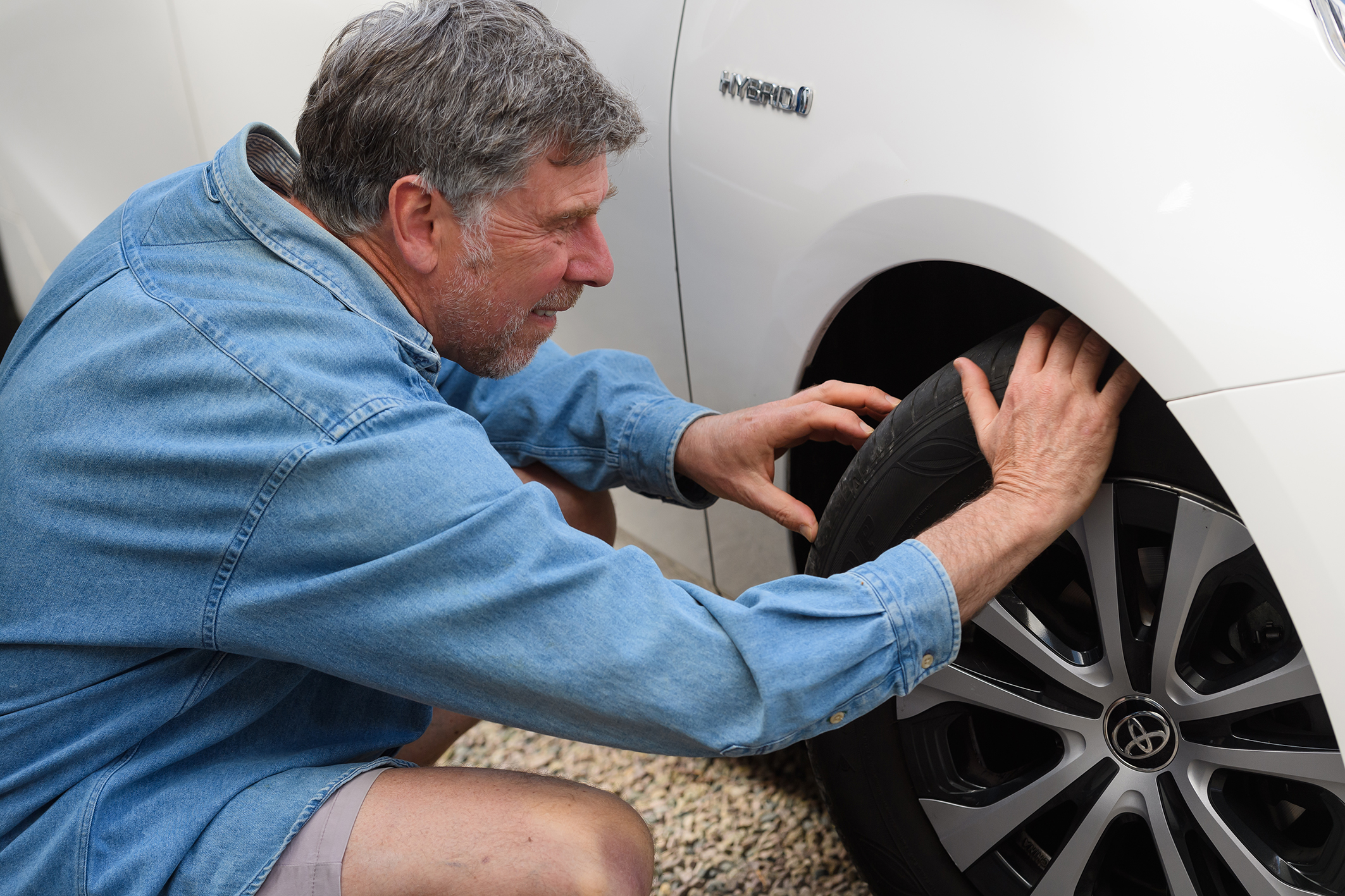
Take a moment to visually inspect each tyre. Look carefully at both the tread area and the sidewalls for:
- Cuts or cracks
- Bulges or blisters
- Objects embedded in the tyre
Damage like this can weaken the tyre structure and increase the risk of failure, particularly at higher speeds or in wet conditions. If you spot anything unusual, it’s important to have the tyre checked by a professional.
More advice on spotting tyre damage can be found here.
Tread
Tread depth plays a vital role in dispersing water and maintaining grip. The legal minimum tread depth for cars is 1.6mm across the central three-quarters of the tyre, but research shows tyres perform far better with more tread remaining.
At 50mph in the wet, tyres with 3mm of tread stop much sooner than those worn down to the legal limit — a valuable safety margin, especially if reaction times are reduced.
You can check tread depth using a simple tread depth gauge or the edge of a 20p coin. TyreSafe explains how to do this correctly here.
A Small Routine with a Big Safety Impact
Making tyre checks part of your regular routine is a simple step that can significantly improve safety and confidence behind the wheel. Well-maintained tyres support better braking, handling and stability — helping drivers of all ages continue driving safely for longer.
To find a local TyreSafe Supporter who will be able to offer free tyre checks, on the ground support and information and professional tyre advice, motorists can head to the TyreSafe Supporter Locator.
 Older Drivers Forum