
Notifiable medical conditions
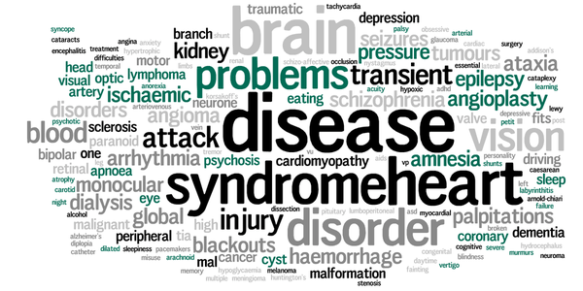 ‘Notifiable’ medical conditions and disabilities include epilepsy, strokes and other neurological conditions, mental health problems, physical disabilities and visual impairments.
Click here to see the list of notifiable medical conditions
https://www.gov.uk/health-conditions-and-driving
For additional advice regarding Eyesight and the use of Medicine and Drugs whilst Driving please visit our page on Eyesight and Medicines
For more information about medical conditions which could affect your driving, click here.
If you have a medical condition which may affect your ability to drive, we would always recommend attending a Driving Mobility Centre and consider undertaking an assessment. The below video shows someone undertaking just such an assessment. To find a centre need you click here
DVLA Customer Service Guide for Drivers with a Medical Condition
Click here to read this guide from the DVLA
Driving with Diabetes
Two main types of diabetes:
- Type 1 diabetes – develops if the body cannot produce insulin. Accounts for around 10% of all people with diabetes
- Type 2 diabetes – develops when the body can still make some insulin, but not enough, or when the insulin that is produced does not work properly. Accounts for around 90% of people with diabetes
Facts:
- Around 1 in 20 people in UK have diabetes
- By 2025 it is estimated 4 million people will have diabetes
- Chance of diabetes increases as we get older
- Males aged 70 are four times more likely to have notifiable diabetes
Car drivers and motorbike riders do not need to tell DVLA if you control your diabetes by diet or tablets unless you are told to by your doctor.
If you are insulin treated – You need to tell DVLA.
You also need to tell DVLA if you have suffered any of the following:
• 2 episodes of severe hypoglycaemia (help needed from another person) within the last 12 months
• developed impaired awareness of hypoglycaemia
• visual problems
Buses and lorry drivers need to tell DVLA if you have diabetes for which you take medication or if your doctor advises you to.
If you are on insulin, you need to:
• have 3 months of continuous blood glucose readings available on a memory meter every time you apply for a licence
• test your blood glucose no more than 2 hours before the start of your first journey and every 2 hours through the day
You will also need to test your blood glucose and record your readings at least twice a day even when not driving.
Diabetes complications:
If diabetes is not managed it can affect a person’s ability to drive with certain complications, such as:
- Eye problems
- Nerve problems (neuropathy)
- Circulation
- Amputation
Peripheral neuropathy:
Peripheral neuropathy is a complication of Type 2 diabetes and can produce two distinct problems:
- Loss of sense of touch, which can affect feeling in feet
- Proprioception which can cause a person not knowing where or what angle their foot is at
Both these essential for safe driving
There are around 2 million UK drivers with Peripheral neuropathy, 6% which are older drivers.
Diabetes Help
Diabetes UK have created useful information about driving with Diabetes. Click here to to read this advice.
Below are is a useful video to give guidance
Driving with Dementia
A diagnosis of dementia is not in itself a reason to stop driving. One in every three people with dementia still drives. What matters, from both a legal and a practical point of view, is whether the person is still able to drive safely.
To find out more about this click here for more information from the Alzheimers Society.
The Alzheimer’s Society say driving may feel easy and natural for people who drive often or have been driving for many years. However, it is a complex task that involves quick thinking as well as sensory (vision, hearing) and manual skills.
A safe driver must use a range of mental abilities including:
- focus and attention – to switch between different driving tasks while ‘reading’ the road
- visuospatial skills – to keep the right speed, distance and road position
- problem-solving skills – to deal with any challenges on the road, such diversions or obstacles
- judgement and decision-making – for example, to understand and prepare for the actions of other road users
- reaction skills – to act quickly to avoid an accident
- memory – for example, to remember a route.
- Being patient and calm also helps people to drive more safely.
As dementia gets worse, it affects these skills even more. This means everyone with dementia will eventually be unable to drive safely. How quickly this happens varies from person to person.
The law and driving
If you are diagnosed with any form of dementia, you must inform the DVLA straight away, failure to do so may incur a fine up to £1000.
We would always recommend that you undertake an assessment with your local Driving Mobility Centre who have specially trained Approved Driving Instructors and Occupational Therapists who can help you understand if you are still safe to drive
The below flow chart is used by the NHS in reviewing someone driving with dementia, click here to go to downloadable PDF version
The Alzheimers Society have created a guide for anyone who has recently been told they have dementia. This could be any type of dementia, such as Alzheimer’s disease, vascular dementia or mixed dementia. It will also be useful to close friends and family of someone with dementia, as it contains information for anyone taking on a caring role. Below is the video all about this
Driving after a Stroke
The Stoke association has created a useful guide all about Driving after a Stroke, Click here to read this guide of visit the Stroke Association website by clicking here
 Older Drivers Forum